Introduction
Air fryers have fundamentally changed how many people approach everyday cooking. What started as a niche kitchen appliance has become mainstream, appealing to home cooks who want quicker meal preparation without sacrificing quality. Among the various options available, larger capacity models with multiple cooking functions have gained particular attention from families and those who enjoy experimenting with different cooking techniques.
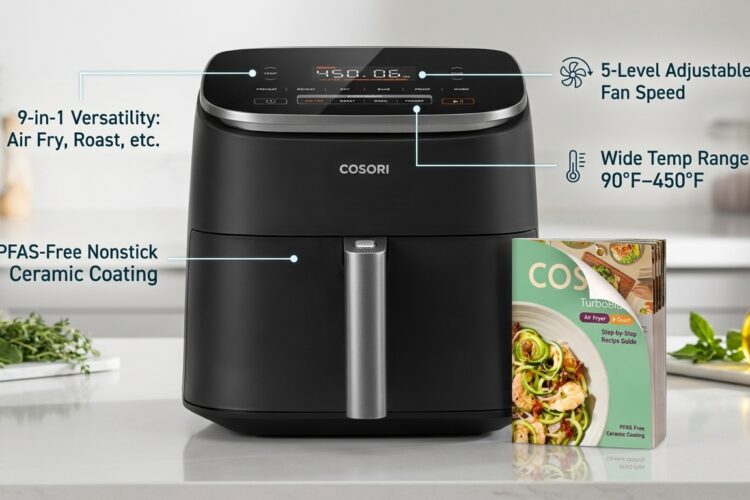
The Cosori TurboBlaze Air Fryer represents a segment of the air fryer market that prioritizes versatility and capacity. With its 6-quart size and nine distinct cooking modes, it positions itself as an appliance designed to handle more than just traditional air frying. This article explores what such an appliance offers, who might find it useful, and what factors deserve consideration when thinking about this type of cooking device.
Understanding an appliance’s capabilities and limitations helps anyone make informed decisions about kitchen purchases. This guide examines the TurboBlaze’s features, explores practical applications, and addresses common questions people have about multi-function air fryers.
Key Features and Specifications
Capacity and Physical Footprint
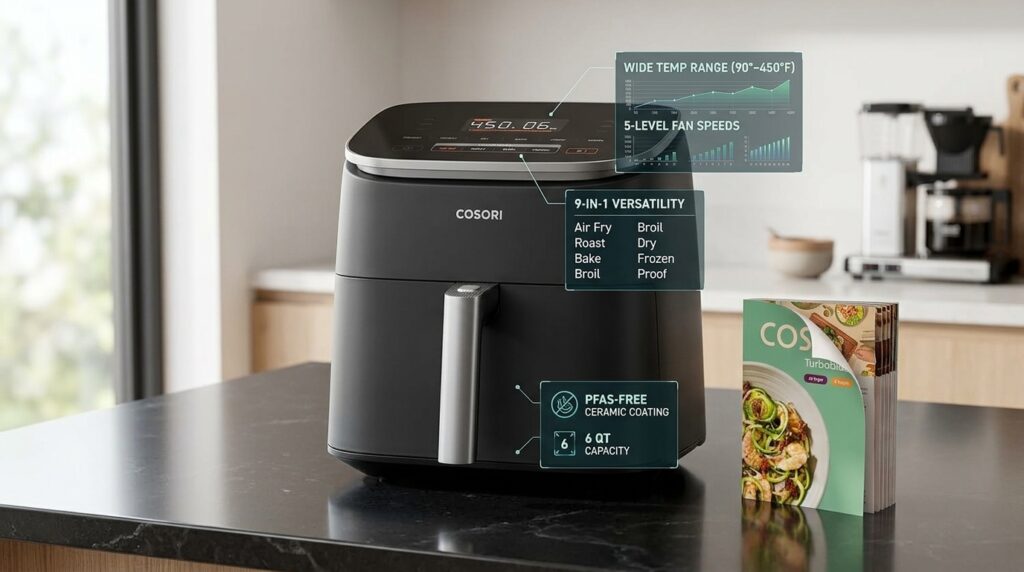
The 6-quart capacity distinguishes this model within the air fryer category. To put this in perspective, many standard air fryers contain 2.5 to 4 quarts of cooking space. A 6-quart basket accommodates larger portions or entire meals that might otherwise require multiple batches.
For households with four or more people, this size proves practical for cooking chicken breasts, sheet-pan meals, or batch cooking for the week. It also means less time spent repeating cooking cycles when preparing food for guests or larger family gatherings. The physical footprint, however, warrants consideration—this appliance requires adequate counter space or cabinet storage, something worth measuring before purchasing.
Temperature Range and Precision
The device operates across a temperature spectrum from 90°F to 450°F. This unusually low starting temperature opens up cooking possibilities beyond what traditional air fryers typically offer. The 90°F minimum enables gentle warming and specific applications like proofing bread dough, keeping prepared foods at serving temperatures, or slowly drying foods without applying high heat.
The 450°F maximum aligns with standard air fryer upper limits and addresses high-heat cooking needs like crisping exterior surfaces or quick cooking. This broad range reflects the appliance’s multi-function positioning.
Five-Level Fan Speed Control
Air fryers rely on rapid air circulation to cook foods, and adjustable fan speeds add nuance to this process. Five distinct speed levels allow users to customize airflow intensity depending on what’s being cooked. Lower speeds suit delicate items that might benefit from gentler circulation, while higher speeds deliver the crispy textures associated with air frying.
This feature shifts air frying from a one-size-fits-all cooking method to something more adaptable. Someone preparing fish fillets might use different settings than when cooking frozen fries, even within the same appliance.
PFAS-Free Ceramic Coating
The ceramic coating represents a material choice some consumers prioritize. PFAS (per- and polyfluoroalkyl substances) are fluorinated compounds historically used in non-stick coatings. Health discussions surrounding these substances have prompted manufacturers to explore alternatives like ceramic coatings.
Ceramic coatings offer non-stick properties without fluorinated compounds. They require proper care—typically hand-washing and avoiding abrasive scrubbers—but provide a cooking surface option for those specifically concerned about PFAS exposure.
Nine Cooking Functions
Rather than just air frying, the device includes air fry, roast, bake, broil, dry, proof, and other cooking modes. While air frying relies on high-velocity hot air circulation, these alternate functions expand the appliance’s versatility.
- Roasting involves slower, indirect heat application suited to vegetables or proteins
- Baking enables preparation of items like biscuits or sheet cakes in smaller quantities
- Broiling applies direct high-heat cooking similar to a traditional broiler
- Drying uses gentle heat circulation to dehydrate foods over extended periods
- Proofing provides controlled temperature maintenance for bread or dough rising
- Frozen offers pre-programmed settings optimized for cooking from frozen states
How This Appliance Fits Into Practical Cooking
Meal Preparation Efficiency
The combination of 6-quart capacity and multiple cooking functions addresses a specific cooking challenge: preparing varied meals with different requirements in limited time. A weeknight dinner might involve proteins that need different heat treatments, vegetables requiring distinct cooking times, or side dishes using various techniques.
With adequate space, some of these components might cook simultaneously using different functions, provided the temperature requirements align. For example, someone preparing a roasted chicken might also roast vegetables using the same mode and similar temperature settings.
Exploring Alternative Cooking Methods
Not everyone has conventional ovens available—small apartment dwellers, those with galley kitchens, or anyone managing limited appliance space might appreciate a single device offering oven-like functions. The range from 90°F to 450°F, combined with nine different modes, attempts to simulate various conventional cooking methods within one appliance.
Seasonal and Dietary Flexibility
The drying function appeals to people interested in food preservation, creating dried herbs, dehydrating fruits, or preparing dried snacks. The proofing capability benefits bread enthusiasts who appreciate consistent temperature control during fermentation stages. These functions serve specific needs rather than everyday cooking, but they add practical value for those with particular interests.
Batch Cooking and Meal Prep
The 6-quart size suits batch cooking workflows. Someone preparing meals for the upcoming week can process larger quantities at once, whether air frying chicken thighs, roasting a big batch of root vegetables, or preparing other components that store well. This efficiency appeals to people who dedicate time to meal preparation.
Who Might Find This Appliance Suitable
Growing Families
Families with school-age or teenage children often face the challenge of feeding multiple people efficiently. The 6-quart capacity reduces the need for multiple cooking batches, making weeknight dinner preparation faster.
Home Cooks Interested in Various Techniques
People who enjoy experimenting with different cooking methods benefit from having options available. Someone interested in bread baking, food dehydration, or exploring various roasting techniques finds value in consolidated functionality.
People with Limited Kitchen Space
Despite its 6-quart size, having one appliance that performs multiple cooking functions saves overall counter space compared to owning several smaller specialized tools. This appeals to anyone working within space constraints while wanting cooking versatility.
Those Interested in Food Preparation Control
The adjustable fan speeds and temperature range appeal to home cooks who want more control over their cooking process. Instead of using pre-programmed settings, they can fine-tune conditions based on what they’re preparing and how they want results to turn out.
Individuals with Specific Dietary Approaches
People following certain diets or preparing foods in particular ways—whether that involves avoiding air-fried foods in favor of roasting, baking, or dehydrating—appreciate having options beyond one cooking method.
Practical Cooking Considerations
Understanding Heat Circulation vs. Traditional Ovens
Air fryer cooking differs fundamentally from conventional oven cooking. Traditional ovens apply heat through different mechanisms—heating elements above and below, sometimes using convection fans. Air fryers use rapid hot air circulation, which produces different results.
This means recipes designed for conventional ovens don’t always translate directly to air fryer settings. Cooking times shorten significantly, and temperatures often run lower. Someone accustomed to conventional cooking might need to adjust their approach when using this appliance.
Basket Arrangement and Air Flow
The 6-quart capacity allows generous portion sizes, but it also requires understanding how to arrange food for optimal results. Air must circulate around items for even cooking. Overcrowding the basket—while tempting with such capacity—compromises this circulation and results in unevenly cooked food.
Learning the appropriate quantity for different foods, understanding whether items need flipping halfway through cooking, and recognizing when multiple batches actually deliver better results than one overcrowded batch represents a learning curve for anyone new to air fryer cooking.
Preheating and Temperature Accuracy
Air fryers heat quickly—often reaching desired temperatures within a few minutes. Preheating requirements depend on what’s being cooked. Some foods cook better with preheating, while others adapt fine to cold-start cooking.
Temperature accuracy varies among appliances. The digital controls indicate selected temperatures, but actual cooking conditions depend on various factors including room temperature, basket arrangement, and food type. Observing results across different preparations helps anyone develop intuition about timing and temperature settings.
Maintenance and Cleaning
The ceramic coating requires gentler handling than some non-stick surfaces. Hand-washing generally works better than dishwasher cleaning, and avoiding metal utensils or abrasive scrubbers helps preserve the coating longevity.
The basket and other removable parts require regular cleaning to prevent buildup from cooking oils and food residue. This maintenance routine affects the appliance’s cleanliness and cooking performance over time.
How Multi-Function Air Fryers Compare Across Product Categories
Air Fryers vs. Conventional Ovens
Traditional ovens excel at certain tasks—baking large batches of cookies, roasting a whole turkey, or handling items requiring precise temperature stability. They provide more even heat distribution across multiple racks and handle larger quantities simultaneously.
Air fryers offer speed and energy efficiency for smaller portions. They preheat quickly, cook faster, and use less electricity. However, they typically handle smaller quantities and may produce different texture outcomes for certain foods.
Multi-function air fryers attempt to bridge this gap by offering multiple cooking modes. However, they still work within their size constraints and physical limitations.
Air Fryers vs. Toaster Ovens
Toaster ovens occupy a similar appliance category and offer comparable versatility. They accommodate larger items like whole pizzas or sheet pans and handle batches of items on multiple racks. They typically cook more slowly than air fryers and don’t provide the rapid air circulation that creates air-fried textures.
The choice between air fryers and toaster ovens often comes down to preferred cooking styles and what results matter most. Someone prioritizing speed and the specific texture of air-fried foods chooses accordingly; someone needing to handle larger quantity batches might prefer toaster oven capacity.
Dedicated Appliances vs. Multi-Function Devices
Specialized appliances—dedicated dehydrators, bread makers, or compact ovens—often perform their specific function more optimally than multi-function devices attempting to do everything. A dedicated dehydrator provides more precise control over drying conditions than an air fryer’s drying mode.
The trade-off with multi-function appliances involves accepting that each function might not perform as perfectly as a specialized tool, in exchange for the convenience of consolidated functionality and counter space savings.
Important Considerations Before Choosing
Space and Storage
The 6-quart size requires meaningful counter real estate or storage space. Understanding exactly where this appliance will live—whether remaining on the counter, stored in a cabinet, or placed in a pantry—matters before purchasing. Dimensions should be measured against available space.
Actual vs. Marketed Capacity
Manufacturers sometimes calculate capacity differently. While this device advertises a 6-quart basket, the actual usable cooking capacity may be less when accounting for how items need to be arranged for proper air circulation. Reading user discussions and reviews provides practical insights into real-world cooking quantities.
Learning Curve and Experimentation
Using an appliance effectively requires learning its characteristics. Someone transitioning from conventional cooking needs time to understand timing, temperature settings, and optimal arrangement for different foods. Expecting perfect results immediately sets unrealistic expectations.
Energy Consumption
Air fryers generally use less energy than conventional ovens, but actual consumption depends on frequency of use, duration of cooking, and temperature settings. If this replaces conventional oven usage, energy savings may follow; if it adds to existing appliance usage, overall consumption increases.
Noise Level
Rapidly circulating hot air produces noise. Air fryers aren’t silent appliances, and this sound level matters to some people more than others, particularly in open kitchen layouts or for anyone noise-sensitive.
Frequently Asked Questions
What temperature should I use for different foods?
Air fryer cooking temperatures typically run lower than conventional oven temperatures—often by 25-50°F depending on the food. Starting at recommended temperatures and adjusting based on results works better than trying to convert conventional recipes directly. Many resources offer air fryer-specific temperatures for common foods.
How often should I flip or shake food during cooking?
This depends on the specific food. Some items benefit from flipping halfway through, while others cook fine without intervention. Denser proteins might need flipping; softer items or smaller pieces often cook evenly without it. Observing results and taking notes helps develop patterns for future cooking.
Can I use my regular recipes in this appliance?
Partially. The basic ingredients and flavoring profiles remain the same, but cooking times and temperatures need adjustment. Using air fryer-adapted recipes rather than directly translating conventional recipes typically produces better results. Over time, home cooks develop intuition about conversions.
Is the ceramic coating truly non-stick?
Ceramic coatings provide non-stick properties, though not identically to some traditional fluoropolymer coatings. They work well with minimal oil or cooking spray, though some people add a small amount of oil for enhanced non-stick performance and browning.
How does the 5-level fan speed feature help?
Different foods benefit from different airflow intensities. Delicate items like certain vegetables or fish fillets might require lower speeds to prevent damage or drying out, while heartier items that benefit from crisping work better at higher speeds. This adjustability provides more control than appliances with single fan speed settings.
What does the proofing function actually do?
This function maintains a specific temperature—typically around 80-95°F—ideal for bread dough fermentation. Rather than using a conventional oven set to low temperature or a specialized proofing box, this function provides controlled conditions within the same appliance.
Can I bake biscuits or small cakes in this?
Yes, the baking mode enables this. However, the appliance’s size and air circulation affect results differently than conventional ovens. Baking in air fryers requires adjusted recipes and expectations—results differ but can still be satisfactory depending on what you’re preparing.
How do I know when food is actually done cooking?
Using a food thermometer provides objective measurement, particularly for proteins. Checking visual doneness—color, crispness, texture—develops with experience. Many air fryer resources include timing guides and doneness indicators for specific foods.
Conclusion
The Cosori TurboBlaze Air Fryer represents one approach to addressing the practical cooking challenges many people face. Its 6-quart capacity, temperature range from 90-450°F, adjustable fan speeds, and nine cooking functions combine features that appeal to those seeking versatility and efficiency in their kitchen.
Whether this specific appliance suits your cooking style and needs depends on personal factors—available space, preferred cooking methods, household size, and what you cook regularly. Multi-function air fryers offer genuine benefits for some cooking scenarios while falling short in others. Understanding what this category of appliance does well, what compromises come with consolidating multiple functions, and how it fits into your existing cooking approach matters more than any abstract ranking.
For those seriously considering this type of appliance, exploring how it addresses your specific cooking situations—not just general features—guides the decision-making process. Examining real-world applications, considering your kitchen setup, and being realistic about your cooking habits prove more valuable than focusing solely on specifications.