
Introduction
The air fryer has fundamentally changed how many people approach weeknight cooking. What was once a novelty gadget has become a legitimate kitchen staple for households seeking faster meal preparation without sacrificing texture or flavor. For those living in apartments, smaller homes, or anyone with limited counter space, compact air fryer models have opened up access to this cooking method without requiring a dedicated chunk of real estate on the kitchen countertop.
The transition to air frying often raises practical questions for new users. How does a smaller capacity unit handle family meals? What’s the learning curve? Are there limitations to what you can actually prepare? These questions are especially relevant when considering models designed specifically for those who need efficiency without bulk.
Understanding what a compact air fryer can and cannot do—and how to use it effectively—helps you make an informed decision about whether this approach to cooking fits your lifestyle. This article explores the features, capabilities, and practical considerations of smaller-capacity air fryers, using a specific 4-quart model as a reference point for discussion.
Understanding Air Fryer Basics
Before diving into specific features, it’s worth understanding how air fryers work at a fundamental level. Unlike traditional deep frying, which submerges food in hot oil, air fryers use rapidly circulating hot air to create a crispy exterior. A heating element generates temperatures typically ranging from 160°F to 400°F, while a powerful fan circulates this heat around the food at high velocity.
This cooking method works because the intense heat causes moisture on the food’s surface to evaporate rapidly while the Maillard reaction—the chemical process that creates browning and complex flavors—occurs. The result is foods with crispy, golden exteriors and tender interiors, often achieved with little to no added oil.
The compact size of certain air fryer models doesn’t significantly change this fundamental process. What changes is capacity and, sometimes, heating speed. A 4-quart basket still heats and circulates air efficiently; it simply holds less food than a 6 or 7-quart model would.
Capacity Considerations: What 4 Quarts Actually Means
When shopping for compact air fryers, capacity is probably the first practical consideration. A 4-quart basket might sound modest compared to larger models, but understanding what this translates to in real cooking scenarios helps set realistic expectations.
Four quarts is roughly equivalent to 1 gallon, which in practical terms means you can typically prepare:
- A full chicken breast with side dishes in one batch
- Enough fries or vegetable chips for two to three people
- A entire sheet’s worth of cookies or small pastries
- A pound of ground meat with vegetables
- Multiple portions of fish or shrimp
However, you cannot cook everything in the basket simultaneously if you want proper air circulation and even cooking. Overcrowding prevents the hot air from reaching all surfaces equally, resulting in uneven texture—some pieces crispy, others not quite right.
For single people or couples, a 4-quart capacity is often sufficient for complete meals. For families of four or more, you may need to cook in batches or use the air fryer as part of a meal preparation strategy alongside traditional cooking methods.
Key Features That Matter
Touchscreen Controls and Presets
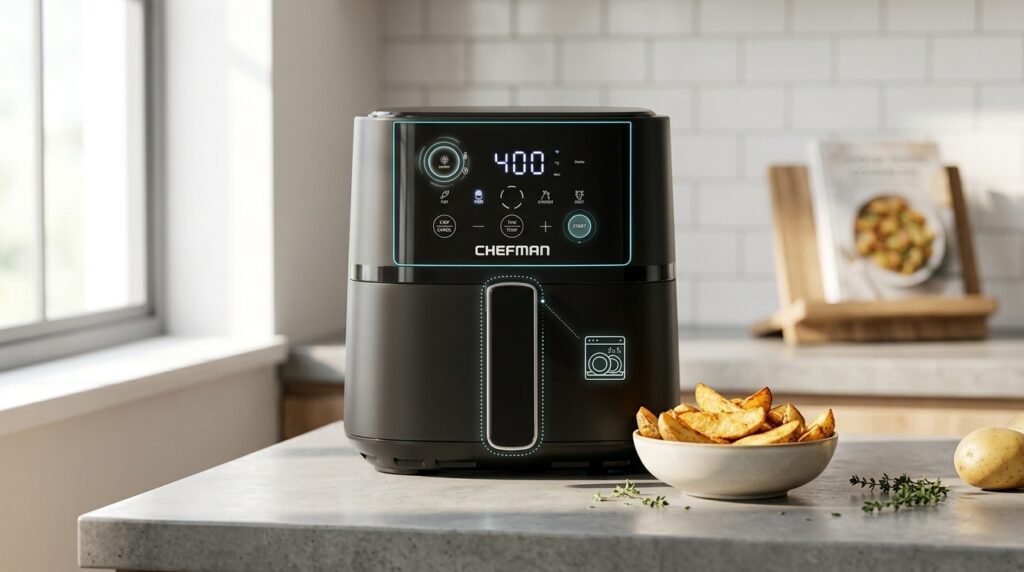
Modern air fryers increasingly feature digital touchscreen interfaces rather than traditional knobs and buttons. A touchscreen display provides clear visual feedback about temperature and time settings. For those less comfortable with technology, preset buttons can simplify operation—you select the food type (fries, chicken, vegetables, desserts, etc.), and the unit automatically sets appropriate temperature and time recommendations.
Presets serve as helpful starting points, though most experienced air fryer users adjust times and temperatures based on their specific preferences and the exact thickness of their food. What works perfectly for thin-cut fries might require adjustment for thicker wedges.
Four preset options represent a middle ground—enough variety for common foods without overwhelming the control panel. You typically have room to learn the basics without needing to memorize numerous settings.
Hi-Fry Technology and Crispness
The term “Hi-Fry Technology” refers to enhanced air circulation patterns designed to maximize the contact between hot air and food surfaces. This isn’t a universal industry standard; rather, it’s specific terminology used by manufacturers to describe their approach to heating and air flow design.
In practical terms, models marketed with this feature are engineered to produce particularly crispy textures. Whether this significantly outperforms other quality air fryers depends on many variables—food preparation, basket arrangement, starting temperature, and user technique all play roles in the final result.
The pursuit of crispiness often involves preheating the unit (typically 3-5 minutes), arranging food in a single layer rather than stacking, and sometimes using a light mist of cooking spray to enhance browning. These techniques matter regardless of the specific technology name.
Nonstick and Dishwasher-Safe Baskets
The basket interior’s coating affects both cooking performance and maintenance. A quality nonstick surface reduces the likelihood of food sticking, making the final product easier to remove and cleanup simpler. Over time, nonstick coatings can wear, especially with frequent washing or if cleaning with abrasive materials.
Dishwasher-safe baskets eliminate hand-washing, which is genuinely convenient for busy households. However, some users report that repeated dishwasher cycles may eventually affect nonstick coatings more than hand-washing does. A gentle hand-wash with soft sponges and mild soap can extend the life of the nonstick surface.
What You Can Actually Cook in a Compact Air Fryer
Understanding the range of foods suitable for air frying helps you determine whether this cooking method will genuinely simplify your routine.
Obvious Candidates
French fries, chicken wings, and crispy vegetables are air fryer staples for good reason. Foods that traditionally benefit from deep frying—those where you’re seeking a crispy exterior—translate beautifully to air frying with minimal oil or none at all.
Frozen foods also work well since they’re already portioned and require no additional preparation. Many frozen items (chicken nuggets, spring rolls, samosas, etc.) can go directly from freezer to basket.
Vegetables and Sides
Brussels sprouts, broccoli, cauliflower, zucchini, and asparagus all benefit from air frying. The high heat caramelizes their exteriors while maintaining tender interiors. Root vegetables like potatoes and carrots work well when cut appropriately.
The key with vegetables is preventing them from drying out. Most benefit from a light toss of oil (even just a spray) before cooking, and timing matters significantly—10 minutes might be perfect for thin-sliced zucchini while thicker carrot pieces need 18-20 minutes.
Proteins
Chicken breasts, thighs, drumsticks, and wings all air fry successfully. Fish fillets work well, particularly when they’re at least ½-inch thick. Shrimp cook quickly (often 6-8 minutes) and develop a pleasant texture. Ground meat requires more attention—it needs occasional stirring to ensure even cooking.
Thicker cuts of meat (whole chicken breasts, steak medallions, pork chops) benefit significantly from preheating and careful temperature management. Many people find that medium-rare outcomes are more reliable when they use a meat thermometer to check doneness rather than relying solely on time.
Baking and Desserts
This category surprises many people. Small baked goods work remarkably well in air fryers—muffins, donuts, small cakes, cookies, and pastries can all be prepared. The circulating heat environment is quite different from a traditional oven, however, which means recipes designed for ovens often need adjustments to temperature and time.
Baking items also highlights the capacity limitation. A standard muffin tin won’t fit in a 4-quart basket, so you’d typically arrange muffins individually or use silicone muffin liners without the tin.
Foods Better Suited to Other Methods
Wet batters don’t work well in air fryers because they require the initial submersion in hot oil to set. You can’t make tempura or traditional beer batter items. Foods that release significant moisture (like tomato-heavy dishes) can create soggy results. Large whole items like whole potatoes or whole chicken might be technically possible but often cook unevenly due to uneven heat distribution.
Delicate items that might break apart (like fish cakes or certain homemade nuggets) require care in basket arrangement and sometimes gentle handling.
Who Benefits Most from Compact Air Fryers
Space-Conscious Households
Anyone with limited counter or storage space benefits from the smaller footprint. Apartments, tiny homes, RVs, and dorm rooms make compact models practical. If counter real estate is already claimed by other appliances, a smaller unit takes up roughly the same space as a toaster.
Single People and Couples
Without a large family to feed simultaneously, 4-quart capacity covers typical meal portions. A single person or couple can prepare complete meals without needing to cook in batches or use multiple cooking methods.
Cooking Enthusiasts Wanting to Experiment
Some people already own a larger air fryer but want a compact model for specific purposes—testing recipes, preparing side dishes while the main oven is in use, or simply diversifying their cooking approach. A secondary compact unit serves these purposes well.
Health-Conscious Cooks
The ability to achieve crispy textures with minimal or no added oil appeals to people focused on reducing fat intake. While air fryers aren’t necessarily lower-calorie than other cooking methods (they’re more about texture and flavor achievement than calorie reduction), they do use significantly less oil than traditional frying.
Busy Professionals
The speed of air frying—typically 15-25 minutes from unpacked to plated—appeals to people with limited time. Minimal prep, quick cooking, and easy cleanup fit into tight schedules.
Important Considerations Before Purchasing
Electrical Requirements
Air fryers draw significant electrical power, typically 1200-1500 watts. This matters if your kitchen has older wiring, shared circuits, or if you frequently run multiple high-draw appliances simultaneously. Using an air fryer while running a microwave and toaster might trip breakers in some homes.
Ventilation
Air fryers release some steam and cooking odors during operation. Kitchens with poor ventilation might experience lingering smells—not necessarily unpleasant, but noticeable. Positioning the unit near a window or under a range hood helps, though it’s not always essential.
Maintenance Requirements
Beyond cleaning the basket, you should occasionally check and clean the heating element and fan area. Food particles can accumulate on the element, potentially affecting performance or creating minor burnt smell over time. Most models are designed for relatively accessible maintenance.
Learning Curve
Even with preset buttons, achieving your preferred outcomes requires some experimentation. The “perfect” time and temperature for thick-cut fries differs from thin-cut ones. Chicken skin crisps differently than chicken breast meat. This experimentation phase—usually 4-6 uses—is normal and expected.
Temperature Precision
While air fryers are generally quite good at maintaining set temperatures, they’re not laboratory-grade precision instruments. Small variations in ambient temperature, unit age, and heating element condition can cause slight fluctuations. For most cooking, this doesn’t matter. For precise baking or temperature-sensitive recipes, it might.
Comparing Compact Air Fryer Categories
Compact vs. Standard Capacity Models
Standard models typically hold 5-7 quarts. This extra capacity means fewer batches for larger families but requires more counter space. The actual cooking mechanics and speed don’t differ dramatically—a 4-quart model heats and cooks nearly as quickly as a 6-quart model.
Basket vs. Paddle Models
Some air fryers use rotating paddles or drawers instead of stationary baskets. These designs claim to require less manual shaking or flipping during cooking. Basket models require more hands-on attention but give you complete control over food arrangement and more flexibility for unusual shapes.
Budget vs. Premium Models
Entry-level air fryers have manual controls (dials and buttons) and minimal presets. Premium models offer touchscreens, app connectivity, and numerous preset options. The actual cooking performance is often quite similar—the difference is in convenience and interface.
Single vs. Dual Basket Models
Some compact models feature dual baskets that cook independently. This allows cooking two different foods simultaneously (fries in one basket, chicken in the other). However, dual basket models take up significantly more counter space and cost more. For single people or couples, the convenience doesn’t always justify the bulk.
Frequently Asked Questions
How long does preheating take?
Most air fryers preheat in 3-5 minutes. Some people skip preheating for foods that will cook for extended periods (like whole chicken), while others believe preheating is essential for achieving optimal crispiness. Testing this yourself helps determine your preference.
Do air fryers use much electricity?
They draw significant power during operation but use it for only 15-30 minutes per meal. The overall electricity consumption is usually lower than running a conventional oven for 30-45 minutes, but higher than stovetop cooking. If electricity costs are a concern, it’s worth calculating your local rates and estimated usage.
Can you layer foods or stack them in the basket?
Not really, or at least not effectively. Air circulation requires space around each piece of food. Stacking prevents proper heat exposure to all surfaces, resulting in uneven cooking. Arranging food in a single layer takes more time but produces better results.
What’s the typical lifespan of an air fryer?
With proper maintenance and normal use, most air fryers last 3-5 years. Some last longer; others have issues sooner. This varies significantly based on frequency of use, maintenance, and build quality.
Are air fryers really healthier?
They enable healthier cooking methods compared to deep frying. You can achieve crispy textures with minimal oil. However, “healthier” is relative—an air-fried donut is still a donut. The real benefit is the ability to enjoy certain textures and flavors while using less oil than traditional frying methods would require.
Can you cook frozen foods directly?
Yes, most frozen foods go directly into the air fryer without thawing. You typically add 5-10 minutes to the normal cooking time. This is genuinely convenient for quick meals.
Does everything need to be flipped halfway through?
Many items benefit from flipping or shaking at the halfway point, especially foods without a natural “top” and “bottom” (like fries or vegetables). Foods with distinct sides (like chicken breasts or fish fillets) often don’t need flipping if your model has good air circulation. Some experimentation tells you what needs intervention and what doesn’t.
How do you clean the basket without damaging the nonstick coating?
Use soft sponges, warm water, and mild dish soap. Avoid abrasive scrubbers, steel wool, or harsh chemicals. Most stuck-on food comes off with soaking for 10-15 minutes. If your model is dishwasher-safe, the dishwasher handles cleaning, though hand-washing may extend the coating’s life.
Can you use cooking spray in an air fryer?
Yes, though some people avoid aerosol sprays and prefer oil in spray bottles instead. Aerosol spray can build up residue on heating elements over time. Either works, but many experienced users favor oil-filled spray bottles for easier cleaning and more control.
Practical Cooking Tips for Better Results
Invest in an Instant-Read Thermometer
Particularly for proteins, a meat thermometer removes guesswork about doneness. Chicken should reach 165°F, pork 145°F, and beef depends on your preference. This tool helps you achieve consistent results.
Arrange Food Strategically
Foods cook faster at the edges of the basket where air circulation is strongest. Larger pieces and items requiring more cooking time belong here; smaller or quicker-cooking items go toward the center.
Pat Foods Dry Before Cooking
Excess moisture prevents proper browning and crisping. Pat chicken, fish, and vegetables dry with paper towels before placing them in the basket.
Experiment with Your Specific Unit
Every air fryer heats slightly differently. Your model’s perfect settings might differ from recipes you find online. After a few uses, you’ll understand your unit’s quirks and preferences.
Don’t Overcrowd
This bears repeating because it’s the most common mistake. Proper air circulation matters more than fitting maximum food into the basket.
Use Parchment or Silicone Liners for Wet Foods
If you’re concerned about sticking or want to minimize cleanup for particularly messy foods, liners help. Ensure they don’t block air flow and stay beneath the food.
The Sustainability Question
Air fryers use less energy than conventional ovens due to their smaller internal volume and more efficient heating. They also produce less wasted heat in your kitchen. From a sustainability perspective, they’re reasonable choices for everyday cooking. That said, they’re not essential—traditional cooking methods remain perfectly viable.
Final Considerations
A compact air fryer isn’t a necessity for good home cooking, but it’s a genuinely useful tool if your lifestyle matches its strengths: limited cooking time, space constraints, or a preference for crispy textures with minimal oil. Understanding what it can realistically do—and its limitations—helps you evaluate whether it fits your kitchen and cooking style.
The learning curve is modest. Within a few uses, most people develop intuition about timing and temperatures for their favorite foods. The convenience of quick cooking with minimal cleanup appeals to people at various life stages, from busy professionals to students living in small spaces.
The actual quality and reliability of specific models varies, so researching particular options, checking user feedback about durability, and understanding warranty terms all contribute to making a good choice.
Ultimately, this cooking method has earned its place in modern kitchens through genuine utility rather than hype. Whether a compact model specifically serves your needs depends on your kitchen space, cooking habits, and whether the convenience justifies adding another appliance to your setup.
Conclusion
Compact air fryers fill a genuine niche for people who want air frying capability without dedicating significant counter space. A 4-quart capacity handles most individual meals and small household cooking without requiring batch cooking for simple dishes.
The features that matter most—reliable temperature control, even heat distribution, and durable nonstick surfaces—are common in quality models at various price points. Touchscreen controls and multiple presets add convenience but aren’t essential for achieving good results.
The real value comes from how well the appliance fits your actual cooking habits. If you frequently cook proteins, enjoy crispy vegetables, or appreciate the speed of air frying, a compact model is worth considering. If you rarely have time to cook or prefer other cooking methods, it might sit unused.
Understanding the practical realities—what fits in 4 quarts, how to arrange food for even cooking, which foods work well and which don’t—helps you make informed decisions about whether this particular kitchen tool aligns with your needs.