Introduction
Air fryers have become increasingly popular in modern kitchens over the past few years, fundamentally changing how many people approach everyday cooking. The basic principle behind air fryer technology involves circulating hot air at high speeds around food, creating a crispy exterior through a process called the Maillard reaction, without requiring traditional deep frying methods that rely on large amounts of oil. This approach appeals to people looking to reduce fat content in their meals while maintaining textures and flavors they enjoy.
The Ninja AF101 represents one approach to this cooking technology, entering a market that has expanded considerably beyond its initial niche. Understanding whether a particular air fryer fits your needs requires looking beyond marketing claims and examining what the appliance actually does, how it performs in real-world scenarios, and whether it aligns with your cooking habits and kitchen setup.
This guide explores the characteristics of the Ninja AF101 model in depth, providing practical information to help you understand the appliance’s capabilities and limitations. Rather than making claims about whether it’s the “best” option available, this article examines the specific features this unit offers, discusses realistic applications, and addresses considerations that matter when incorporating a new appliance into your kitchen routine.
Understanding the Ninja AF101: Core Features and Specifications
Capacity and Size Considerations
The 4-quart capacity represents a meaningful middle ground in the air fryer market. This volume accommodates cooking for small families or allows meal preparation for multiple servings at once, though it’s worth noting that capacity measurements don’t always translate directly to the number of people you can serve, as portion sizes and food types significantly affect how much you can actually fit inside during any single cooking session.
A 4-quart basket has practical implications for your cooking workflow. Single-serving air fryer baskets, sometimes as small as 2 or 3 quarts, work fine if you’re cooking for one or two people, but they require more frequent batches when preparing meals for larger households. The Ninja AF101’s size strikes a balance that appeals to households of three to six people, though this depends entirely on your cooking style and typical meal portions.
The 4-in-1 Cooking Functions
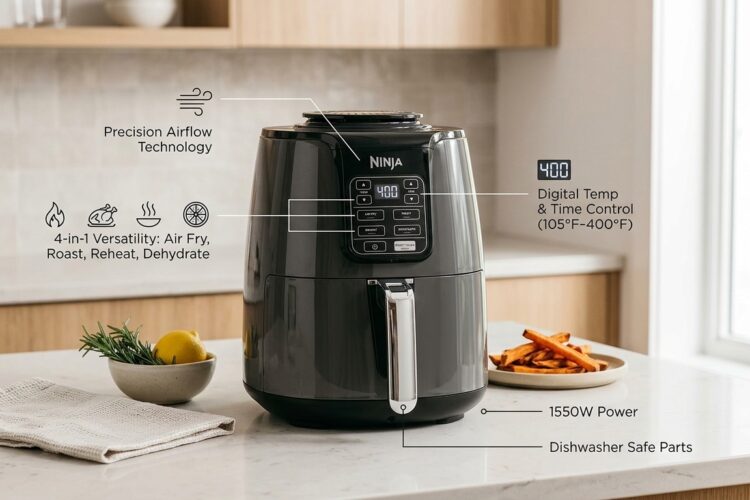
The AF101 advertises four distinct cooking modes: crisping, roasting, reheating, and dehydrating. Understanding what these functions actually mean in practical terms helps you determine whether they align with your cooking interests.
Crisping is what most people associate with air fryer cooking. This function uses high-speed circulating air to cook food quickly, creating that characteristic crispy exterior. Foods like chicken wings, frozen french fries, vegetable chips, and breaded items respond particularly well to this function. The actual temperature and timing adjust based on what you’re cooking and your preferences for browning and crispness.
Roasting operates at lower temperatures than the crisping function, allowing for slower, more even cooking of larger items or foods that benefit from gentle heat. This might include whole vegetables, chicken breasts, root vegetables, or other items where you want thorough cooking without excessive browning. The distinction between crisping and roasting on an air fryer isn’t fundamentally different from conventional oven cooking—it’s primarily about temperature selection and air circulation patterns.
Reheating serves a specific function for people with leftovers. Rather than using a microwave (which can dry out certain foods or create uneven heating) or heating the oven (which requires preheating and uses more energy), the reheating function gently warms food while attempting to restore some textural qualities. This works reasonably well for items like pizza, fried foods, and baked goods, though results vary depending on what you’re reheating.
Dehydrating represents a less common but genuinely useful function for people interested in food preservation or snack preparation. At lower temperatures—starting at 105°F—the air fryer can slowly remove moisture from foods over extended periods. This works for dried fruit, vegetable chips, herbs, or jerky preparation. The extended cooking times required for dehydration differ substantially from the quick-cooking environment that defines air fryer cooking, but the function is genuinely there if you find use for it.
Temperature Range and Power Output
The AF101 operates within a temperature range of 105°F to 400°F. This spectrum covers most cooking scenarios you’ll encounter, from gentle warming at the low end to the aggressive heat needed for crisping at the high end. The 1550-watt power rating indicates the electrical energy the unit draws, which influences how quickly it heats and how effectively it circulates air around food.
For context, 1550 watts is relatively standard for mid-sized air fryers, providing sufficient power for home cooking applications without requiring specialized electrical installation. Most standard kitchen outlets can handle this wattage without issues, though you should avoid simultaneously running multiple high-wattage appliances on the same circuit if your electrical system is older or limited.
Dishwasher-Safe Components
The specification that the basket and accessories are dishwasher safe represents a practical consideration many people appreciate. Air fryer baskets accumulate residue from cooking, and hand-washing each time becomes tedious. The ability to place these parts directly in a dishwasher saves time and effort, though it’s worth noting that some cooking enthusiasts prefer hand-washing to extend the lifespan of non-stick coatings. Your personal preference here matters more than any universal recommendation.
Practical Applications and Cooking Scenarios
Weeknight Dinner Preparation
The AF101 works particularly well for routine weeknight cooking that requires reasonable speed and minimal monitoring. Frozen proteins—whether chicken breasts, fish fillets, or plant-based options—can cook from frozen in the time it takes to prepare side dishes. This represents a genuine time-saving benefit compared to traditional oven cooking, where preheating and longer cooking times add to the overall timeline.
Meal components that traditionally require attention also work well. Vegetable sides like broccoli, Brussels sprouts, or asparagus can caramelize in the basket while you handle other meal components. The high-speed air circulation creates browning on vegetables without the need to stir as frequently as you might on a stovetop.
Batch Cooking and Meal Preparation
The 4-quart capacity makes the AF101 reasonably efficient for preparing components that you’ll use throughout the week. Cooking several chicken breasts at once, preparing batches of roasted vegetables, or preparing herb-roasted nuts for snacking all work with this size. The time-saving potential compounds when you’re prepping multiple components at once, allowing you to fill your week with ready-to-eat items that simply need assembly or reheating.
Frozen Food Preparation
One honest advantage air fryers offer is cooking frozen foods without thawing. Frozen french fries, breaded chicken, frozen vegetables, and similar items cook directly from the freezer without the need to wait for thawing or add significant time to your cooking. Results tend to be more consistent and faster than conventional oven cooking of similar frozen items, which has genuine practical value if your household regularly uses frozen foods.
Entertaining and Larger Gatherings
The 4-quart basket handles typical appetizer preparation reasonably well. Preparing multiple batches of chicken wings, vegetable chips, or breaded items works fine if you’re willing to manage sequential batches. The speed of air fryer cooking makes this more feasible than traditional frying methods, though you should plan on 15-30 minute preparation time if you need significant quantities of any single item.
Texture Preservation for Reheating
For households that generate leftovers, the reheating function helps maintain textural qualities better than microwave reheating in many scenarios. Yesterday’s pizza, fried items, or foods where texture matters more than microwave speed restoration works particularly well. This represents a genuine lifestyle improvement for people who value how their food tastes as much as how quickly it’s prepared.
Who Might Find This Unit Suitable
Small to Medium-Sized Households
Families of three to six people represent the natural fit for a 4-quart air fryer. Smaller households might find single-batch cooking frustrating, while larger families might need to manage sequential batches more frequently than they’d prefer. Your household size matters less than your typical meal component quantities and how often you cook for guests.
People Interested in Texture-Focused Cooking
If crispy textures appeal to you—whether that’s vegetable chips, crispy-edged meat, or golden-brown roasted items—an air fryer aligns with your cooking preferences. Conversely, if you primarily prepare soups, stews, or foods where texture preservation isn’t central to enjoyment, an air fryer remains useful but less specifically aligned with your cooking style.
Home Cooks Seeking Convenience
The speed and ease of air fryer cooking appeals to people who value efficiency without wanting to sacrifice food quality. If your current routine involves significant oven preheating or stovetop monitoring, an air fryer might genuinely reduce your time investment in meal preparation. This matters most if you’re currently cooking in ways that feel cumbersome or time-consuming.
People Interested in Reduced-Oil Cooking
While air fryers don’t eliminate oil entirely (most benefit from a light coating), they use substantially less oil than traditional frying methods. People working toward dietary goals that involve reducing fat intake while maintaining satisfying textures find air fryers genuinely useful, though you should understand that air-fried foods aren’t inherently “healthy”—they’re simply prepared with less oil than deep-fried alternatives.
Households With Limited Oven Space
If your kitchen setup means multiple family members cooking simultaneously strains your available oven space, an air fryer provides an additional cooking vessel. This proves genuinely valuable during holiday meal preparation or when coordinating multiple dishes with different temperature requirements.
Important Considerations Before Purchasing
Kitchen Counter Space
Air fryers require dedicated counter real estate. The AF101 occupies a footprint roughly equivalent to a microwave or toaster oven. Before committing to this purchase, honestly assess whether you have appropriate counter space available or are willing to relocate existing appliances to accommodate it. Storage in a cabinet doesn’t work well since you need regular access to use the unit effectively.
Learning Curve and Recipe Adjustment
While air fryer cooking is straightforward, transitioning from traditional cooking methods requires some adjustment. Oven recipes don’t transfer directly—you typically reduce temperatures by about 25 degrees Fahrenheit and cooking time by roughly 20 percent, though these guidelines aren’t universal rules. The first weeks of air fryer cooking involve some experimentation to develop intuition about timing and temperature for foods you regularly prepare.
Capacity Limitations for Certain Dishes
The basket size limits what you can prepare. Large whole chickens, extensive casseroles, or foods requiring significant height don’t fit comfortably. Understanding which of your regular dishes work in this space and which don’t helps you form realistic expectations about how often you’ll actually use the unit.
Non-Stick Coating Durability
Air fryer baskets rely on non-stick coatings to function properly and maintain food quality. Over time, with frequent use and washing, these coatings can deteriorate. How quickly this occurs depends on your care approach, dishwasher use, and the quality of the coating itself. You should expect that the non-stick properties will degrade after several years of regular use, though the appliance will continue functioning.
Noise Level
Air fryers generate noise during operation due to the high-speed fan circulation. If your kitchen is open to living spaces where others are relaxing or working, the sound level during cooking might be noticeable. This isn’t a deal-breaker for most people, but it’s worth considering if noise sensitivity exists in your household.
Limited Moisture-Based Cooking
Air fryers excel at dry-heat cooking but don’t work well for tasks requiring steam or significant moisture. Steaming vegetables, poaching, or other moisture-dependent cooking methods don’t translate to air fryer use. Your cooking repertoire should include adequate dry-heat methods to make regular air fryer use worthwhile.
How Air Fryer Cooking Compares to Traditional Methods
Versus Conventional Oven Cooking
Conventional ovens provide more capacity and work for a broader range of cooking scenarios. Air fryers cook faster and use less energy, but they handle smaller quantities per batch. Conventional ovens work better for large casseroles, bread baking, and dishes requiring specific moisture levels. Most households benefit from keeping both methods available rather than viewing them as direct replacements.
Versus Stovetop Cooking
Stovetop cooking offers immediate temperature control and works for techniques like sautéing that require constant attention and adjustment. Air fryers handle hands-off cooking more effectively once you’ve set temperature and time. Neither method is objectively superior—they simply excel in different scenarios. Many efficient home cooks use both methods in the same meal.
Versus Traditional Deep Frying
Traditional deep frying uses significantly more oil and requires careful temperature management and safety considerations. Air fryers produce similar textures with minimal oil and less technical complexity. For households that previously deep-fried foods regularly, an air fryer represents a meaningful convenience upgrade without sacrificing the textural results people enjoyed.
Versus Microwave Reheating
Microwaves heat food faster, but they often compromise texture, leaving certain items soggy or unevenly heated. Air fryer reheating takes longer but preserves textures more effectively for many foods. The choice between methods depends on your priorities—speed versus texture quality for that particular meal component.
Maintenance and Practical Care
Regular maintenance keeps your AF101 functioning properly and extends its lifespan. After each use, allow the basket to cool and either hand-wash or place dishwasher-safe components in your dishwasher. The main unit itself simply needs occasional wiping to remove any splattering or residue from cooking.
Check manufacturer guidance for any specific cleaning recommendations for your model. Some people develop strong preferences about using cooking spray versus coating items with oil before placing them in the basket—both approaches work, but they affect cleanup and might slightly influence how the non-stick surface ages over time.
The heating element rarely requires attention, but if you notice any performance changes over time, checking for accumulated debris in the air circulation paths sometimes helps. Most people never need to do this during the unit’s useful lifespan, but it’s good to know if performance seems to change.
Frequently Asked Questions
Can you cook multiple items at different temperatures simultaneously?
Most air fryers, including this model, have one cooking chamber, so you can only cook at one temperature setting during any single cycle. You can cook multiple items together if they require the same temperature and timing, but you can’t simultaneously prepare items needing different heat levels.
Does everything in an air fryer get crispy?
No, and understanding this prevents disappointment. Items with already-high moisture content—like fresh tomatoes or certain vegetables—won’t crisp significantly. Crisping works best on items that naturally have lower moisture or have been prepared to remove surface moisture. Leafy greens, for instance, won’t crisp well no matter what you do.
Is air-fried food actually healthier than oven-cooked food?
This depends on your comparison point. Air fryers use less oil than traditional deep frying, so compared to that method, yes, there’s a fat reduction. Compared to conventional oven cooking, the difference in the final nutritional profile is minimal—you might use slightly less oil, but the fundamental composition of your meal remains similar. Air fryers are genuinely useful for people who prefer the texture of fried foods while wanting to reduce oil consumption, but they’re not inherently “healthy” in comparison to other cooking methods.
How much electricity does this unit use?
The 1550-watt power rating tells you the rate of electricity consumption while running. Actual energy use depends on how often and for how long you use it. Compared to a conventional oven, which heats a larger space, air fryers generally use less total energy. Most people see negligible impact on their electricity bills from regular air fryer use, though this varies by local utility rates and usage frequency.
Can you use recipes from the internet in your air fryer?
Many recipes work with adjustments. Typically, reduce oven temperature by about 25 degrees and cooking time by about 20 percent, then adjust based on your results. Some recipes transfer perfectly, while others require more experimentation. Over time, you develop intuition for which recipes will work well in your specific model.
What’s the difference between this model and more expensive options?
Differences might include capacity, additional preset functions, build quality, warranty coverage, or additional accessories included. More expensive models don’t necessarily cook better—they might offer convenience features or larger capacity, but fundamental cooking performance is often quite similar across mid-range and premium options. Your value assessment depends on whether those additional features matter for your intended use.
How long does the non-stick coating last?
This varies based on care, usage frequency, and manufacturing quality. Most people find the coating remains effective for several years of regular use. How you hand-wash (if you do), whether you use dishwasher cycles, and the types of foods you cook all influence how quickly the coating degrades. Treating it carefully extends its lifespan, but expecting a decade of perfect non-stick performance would be unrealistic.
Can you cook raw meat that’s still frozen?
Yes, many frozen proteins cook directly from frozen in an air fryer, though cooking times are longer than thawed items and you need to ensure the center reaches appropriate temperatures. A meat thermometer helps verify doneness when cooking frozen items, ensuring food safety.
Does it work for cooking baked goods?
Some baked items work well—warming cookies, reheating biscuits, or even cooking some quick breads. Traditional oven baking, especially anything requiring specific rising or moisture levels, doesn’t translate as successfully. Most serious bakers still use conventional ovens, though air fryers handle specific baked applications reasonably well.
Conclusion
The Ninja AF101 represents a straightforward approach to air fryer cooking, offering genuine utility for households interested in faster meal preparation, reduced-oil cooking, and texture-focused cooking methods. Its 4-quart capacity, multiple cooking functions, and dishwasher-safe components address practical considerations that matter for regular kitchen use.
Rather than claiming this is the “best” option or perfect for everyone, the honest assessment is that it serves specific cooking needs well. If your household regularly prepares crispy-textured foods, wants faster cooking compared to traditional ovens, or appreciates the convenience of quick reheating, this appliance offers meaningful value. If your cooking primarily centers on soups, stews, or techniques requiring significant moisture control, the utility might be less clear.
The decision to incorporate an air fryer into your kitchen should ultimately rest on your cooking habits, available space, and genuine interest in the types of meals this technology excels at preparing. Rather than purchasing based on marketing enthusiasm, consider whether this specific appliance aligns with how you actually cook and what changes would genuinely improve your meal preparation experience.